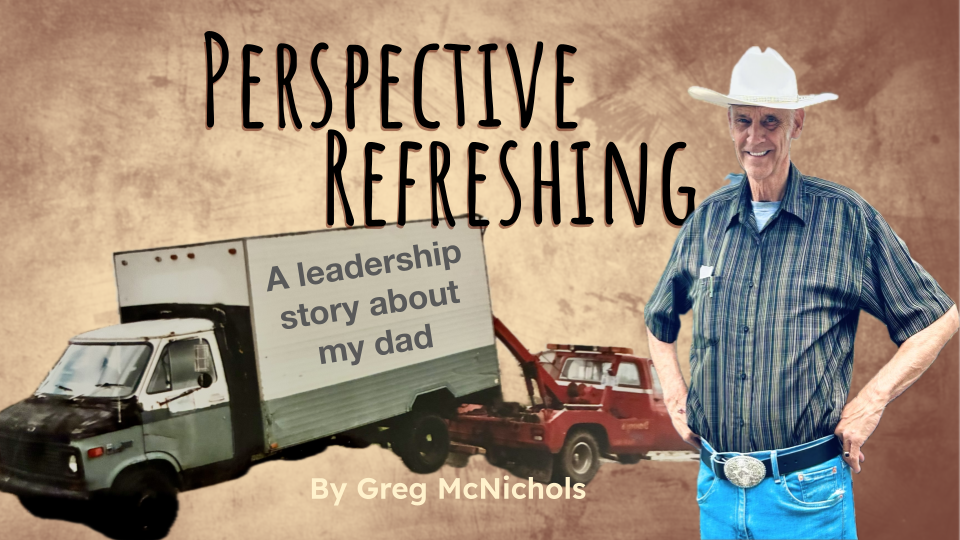
Perspective Refreshing
OLD TRUCKS
Every vehicle our family owned during my teenage years had one thing in common. They all broke down sooner rather than later. Every one of them.
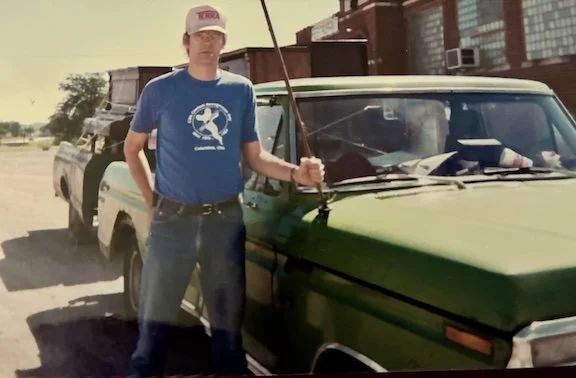
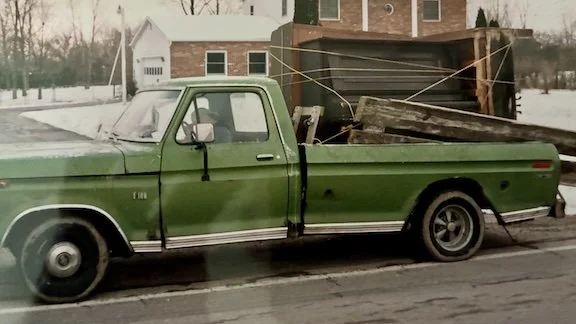
Dad liked to buy pickup trucks he could get for three digits. On occasion, he would splurge on a truck with a four-digit price tag. But that first digit was never going to be bigger than a 1.
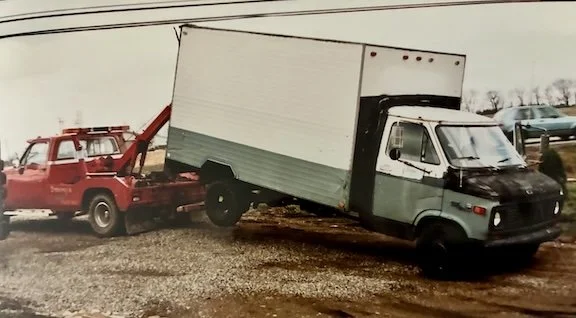
So, fairly regularly, we'd be driving down the road when something under the hood would start making a noise it wasn't supposed to. Or smoke would start rolling out. Or the engine would just quit, and we'd coast to the side of the road. Yet again.
I'd see my friends' parents when their cars wouldn't start or break down. I'd seen moms cry. I'd seen dads pound the steering wheel, cuss, and hit the car with a tire iron.
But Dad would coast our latest dead truck to the side of the road. And as he climbed out, he'd say the same thing every time:
"I can fix it more times than it can break."
Dad would have the truck towed home and hire some random backyard mechanic who looked like they'd walked straight out of the movie Joe Dirt.
After the parts were bought, the truck repaired, and the mechanic paid, I'd ask Dad what it cost. He'd tell me. Then, without missing a beat, he'd add:
"Greg, sometimes in life you have to eat poop. And this truck repair is just another little turd."
With those two lines, and many more like them, Dad taught me volumes about perspective.
HITTING CARS WITH TIRE IRONS
Looking back, I think some of my friends' parents saw those breakdowns very differently than Dad did. All they could see was the inconvenience right in front of them. The car was broken. Fixing it costs money. And they were angry.
They took it personally, as if the car had picked that day to die just to ruin theirs. And that's why the tire iron came out.
Nobody beats on their car because of a worn-out part. You beat on it because somehow, in your mind, that car did something to you.
But Dad's two lines lifted him 10,000 feet above the breakdown. From up there, it was just a broken-down truck, not a personal attack. Dad never pretended the breakdowns weren't frustrating or expensive. He just refused to give them more power over his attitude than they deserved.
We tend to judge our lives by whatever is right in front of us. The noise under the hood. The repair bill. The email that wrecked your morning. The conversation with your supervisor that went sideways.
Up close, every problem blocks your full view. And when the problem is all you see, it shapes how you feel, how you cuss, and what you throw.
But a breakdown on the side of the road looks very different from a wider perspective that includes the thousand miles behind you and the destination still ahead.
Stepping back doesn't fix the truck or pay the repair bill. But it puts the problem back in perspective.
Is the truck out to get you? Or can you fix it more times than it can break? Is the repair bill the end of the world? Or just another little turd you have to eat and move on?
MY PERSPECTIVE REFRESHING PRACTICES
My Pastoral ministry gives me three experiences that regularly pull me back to a proper perspective.
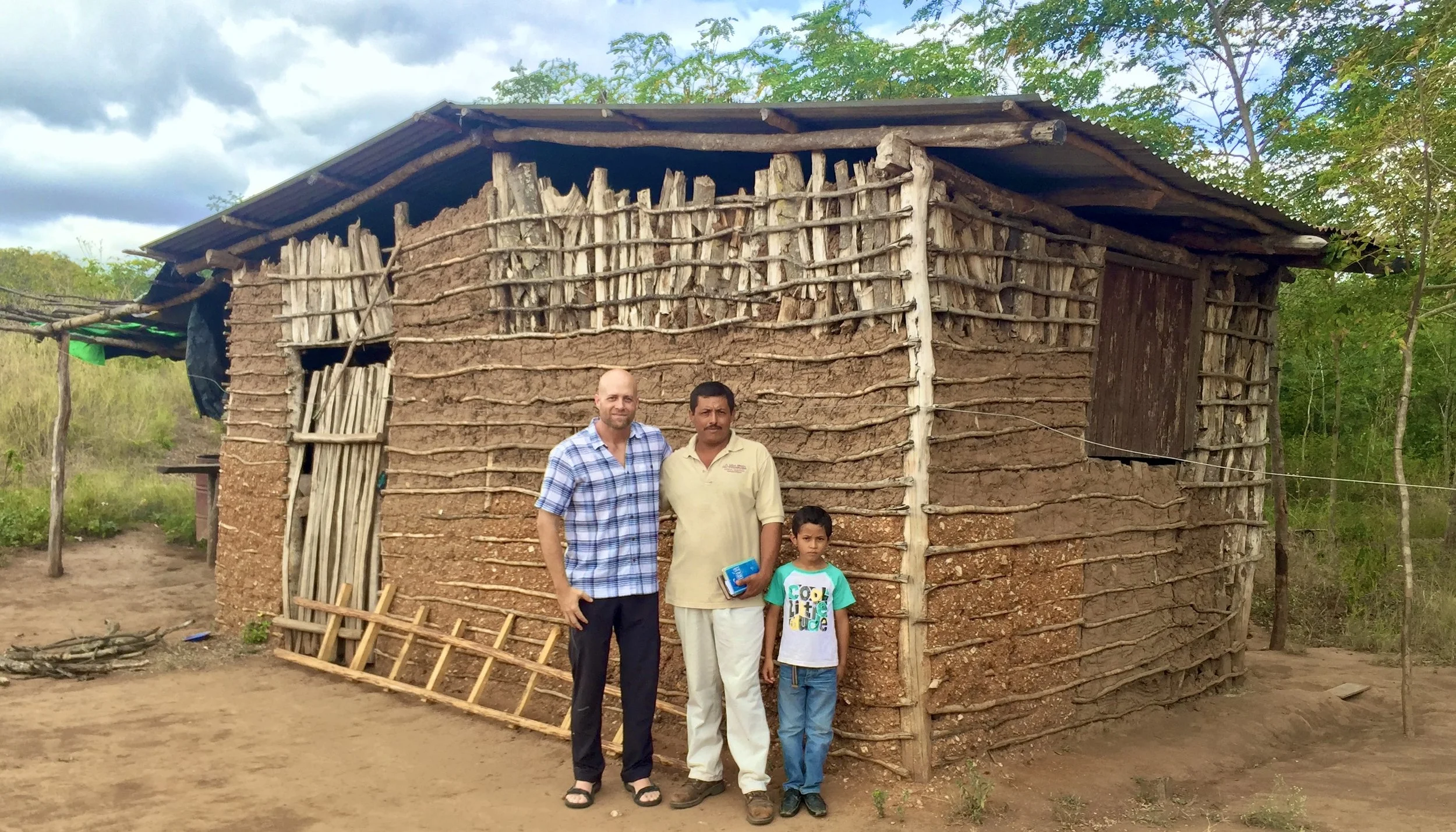
Every year, I walk with at least one couple through a divorce, stand beside a casket as it is closed, and sit in a hut with a dirt floor somewhere in the world.
Let me explain.
Walking with a couple through a divorce reminds me that nobody drove to their wedding planning to end in divorce court. They drifted there, driven by selfish decisions, unresolved hurts, and neglected conversations.
When I stand beside a casket as it closes, with only the family present, I'm reminded that most of what people spend their time stressing about won't matter when they're the one in that casket or standing in that room seeing a loved one for the final time.
Sitting in a hut with a dirt floor somewhere in the world each year reminds me how many of the things people in Ohio stress over are opportunities many people around the world would love to have. I’ve watched these extremely impoverished families face problems with almost no resources, yet somehow find a way forward.
All three perspective-refreshing experiences remind me to see life's temporary things in light of the people and things that will matter for eternity.
BUILDING YOUR PERSPECTIVE PRACTICES
You don't have to be a pastor, stand beside caskets, or travel halfway around the world to build practices that help you maintain perspective. You just need to find ways to regularly get yourself 10,000 feet above whatever is making noise under the hood of your life.
Who are the people in your life who help you see the bigger picture?
What Christian practices help you keep an eternal perspective?
So we don't look at the troubles we can see now;
rather, we fix our gaze on things that cannot be seen.
For the things we see now will soon be gone,
but the things we cannot see will last forever.
2 Corinthians 4:18
17 More Leadership Stories Linked Here
©2026 Greg McNichols. All rights reserved.Click here to connect with Greg McNichols - Bio and Links